Europa Oil & Gas wanted to drill an exploratory borehole on Leith Hill, right in the heart of the Surrey Hills Area of Outstanding Natural Beauty. The site they chose – Bury Hill Wood, on Leith Hill near Coldharbour – would have put industrial drilling operations in stunning woodland, a place beloved by locals and a place that inspires and connects us with it’s natural beauty.
The environmental threat
Ancient woodland and sunken lanes
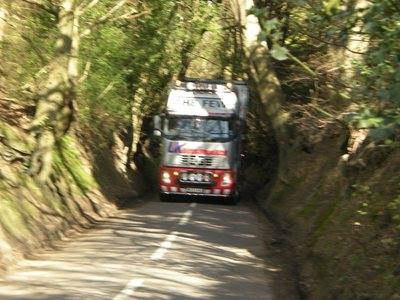
Leith Hill’s woodland includes these amazing, 400-year-old sunken lanes – historic pathways worn deep into the earth over centuries of use. They’re not just pretty and magical; they’re fragile ecosystems that would have been irreparably damaged by the heavy goods vehicle moving equipment and infrastructure to and from the site. The narrow lanes around Coldharbour were designed for horses and carts – not lorries.
Water supply
Fracking operations require enormous quantities of water and involve pumping dirty chemical mixtures deep underground. Water is already treated poorly across the UK – but this would be on another level.
Local buildings
While the fracking experiments were carried out, earthquakes suddenly started occurring across the local area for the first time in living memory. When the fracking stopped, the earthquakes stopped. Coincidence? As if.
An Area of Outstanding Natural Beauty
Leith Hill is the highest point in the Surrey Hills, designated as an Area of Outstanding Natural Beauty which is meant to protect from exactly this kind of vandalism. It should have been protected by law. Instead, Europa was granted permission to industrialise it. At key high court judgements, the local councillors mysteriously decided not to attend. At best it was a dereliction of duty. Who know what other reasons could have affected their judgement?
The scale of the operation
This wasn’t going to be a quick little thing. It was the front line in a fight between the love of nature and the love of money. Their revealed plans included:
- Months of heavy goods vehicle movements through narrow country lanes
- Industrial drilling equipment operating in ancient woodland
- Significant noise, light and air pollution in a tranquil rural area
- Permanent damage to lanes, woodland and local infrastructure
But if they had found a rich seam, were they going to just pack up and go away?
The absurdity of the risk-reward
Even by Europa’s own optimistic estimates, there was less than a 30% chance of finding any oil at all. If they did find oil, the maximum realistic yield would have supplied approximately 0.014% of UK energy demand over 25 years.
Read that again: one-ten-thousandth of UK demand. Three minutes per year of UK energy needs. For thirty years.
For that – for what might amount to literally nothing – Europa wanted to industrialise an Area of Outstanding Natural Beauty, risk the local water supply, damage ancient woodland, and disrupt an entire community.
Bastards.
Why it should never have been approved
The site was in an AONB, in the Metropolitan Green Belt, in ancient woodland, with inadequate infrastructure to support industrial operations. The environmental risks were clear. The community opposition was overwhelming – over 2,000 formal objections. The potential reward was negligible even in Europa’s best-case scenario.
It should have been refused from the start. That it wasn’t tells you everything about how fossil fuel companies operate and how planning systems prioritise extraction over protection.
But it was stopped. Not by the planning system working as it should, but by a community that refused to accept an unacceptable decision.

 Save Leith Hill